Bleeding Gums? Here Is What It Actually Means and How to Stop It
 By Dr. Heena Khan, BDS📅 July 6, 2026⏱️ 7 min read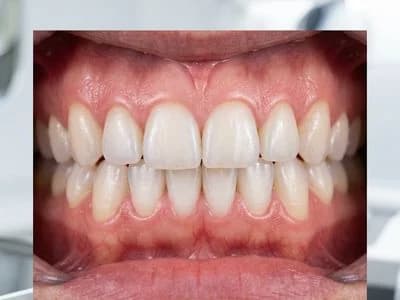
If your gums bleed when you brush or floss, do not dismiss it. Bleeding gums are almost always the first, visible sign of gum disease, a bacterial infection that, if left untreated, will silently destroy the bone and tissue holding your teeth in place. When caught early, gum disease is completely reversible. When ignored, it is not.
Bleeding gums are a warning sign of active inflammation (gingivitis). With professional ultrasonic scaling, gum disease is 100% reversible.
The Two Stages of Gum Disease
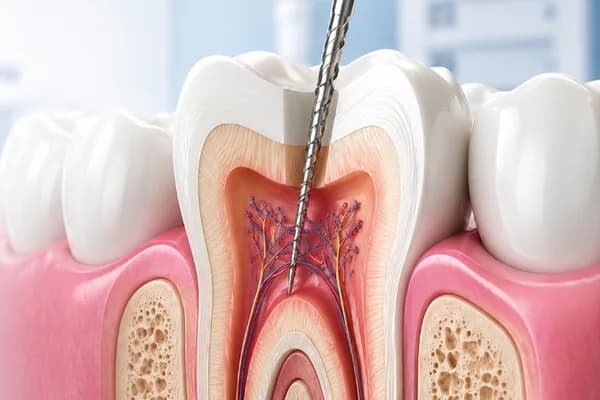
Gingivitis is the early stage. It begins when bacterial plaque accumulates along the gumline and hardens into calculus (tartar). The bacteria in this tartar release toxins that irritate gum tissue, causing it to become red, swollen, and prone to bleeding. At this stage, the underlying bone is unaffected, and gingivitis is fully reversible with a professional cleaning and consistent home care. Read our patient care guidelines for home oral hygiene.
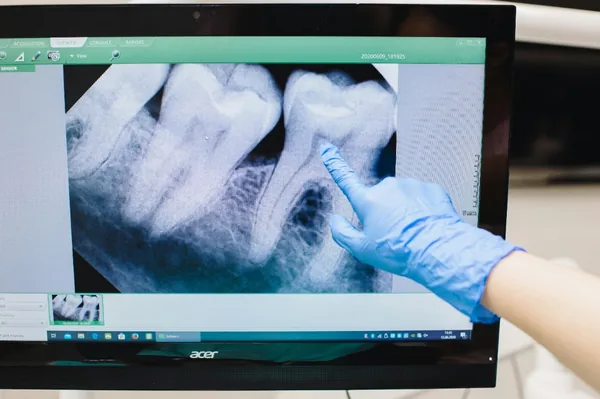
Periodontitis is the advanced stage. If gingivitis goes untreated, the infection spreads below the gumline into the bone and connective tissue anchoring your teeth. Pockets form between gums and teeth, trapping more bacteria. Bone is lost gradually and silently, often without significant pain. By the time teeth become visibly loose, the damage is already irreversible, though the condition can be managed and stabilized with professional treatment. In cases of severe bone loss or tooth mobility, dental implants may be evaluated for tooth replacement.
Gum Treatment Flow
Step-by-step progress tracking for standard treatment protocol.
Warning Signs You Should Not Ignore
- Gums that bleed during or after brushing or flossing
- Red, swollen, or tender gums, healthy gums should be firm and pink
- Persistent bad breath (halitosis) that does not resolve with brushing
- Gums that appear to be pulling away from the teeth (recession)
- Teeth that feel loose, or a change in your bite
- Pus between the teeth and gums
- Sensitivity at the gumline to hot, cold, or sweet foods
"Healthy gums are the silent foundation of strong, stable, and long-lasting teeth."
What Puts You at Higher Risk?
- Poor oral hygiene: Irregular brushing and no flossing allows plaque to accumulate, the primary driver.
- Diabetes: Diabetics are significantly more susceptible to gum infections, and gum disease in turn makes blood sugar harder to control, a bidirectional relationship.
- Smoking and tobacco: Tobacco impairs gum tissue's ability to heal and masks bleeding, making gum disease harder to detect.
- Stress and poor nutrition: These weaken immune response, reducing the body's ability to fight bacterial infection.
- Genetics: Some individuals are inherently more susceptible, even with good oral hygiene.
Professional Treatment: Scaling and Root Planing (SRP)
The clinical treatment for gum disease is Scaling and Root Planing (SRP), a non-surgical deep cleaning procedure.
- Scaling: Using ultrasonic scalers and hand instruments, the dentist removes all plaque, tartar, and bacterial deposits from the tooth surface and from below the gumline, areas brushing and flossing cannot reach.
- Root Planing: Root surfaces are smoothed to remove bacterial toxins. This smooth surface allows gum tissue to reattach more firmly and prevents bacteria from re-accumulating easily.
Local anaesthesia may be used for comfort. SRP in Lucknow typically costs between ₹1,500 and ₹6,000 for a full-mouth procedure.
The Gum Disease–Systemic Health Connection
Clinical research has established strong links between chronic periodontitis and systemic diseases including heart disease, stroke, and Type 2 diabetes. Bacteria from infected gums can enter the bloodstream, contributing to inflammation throughout the body. Treating gum disease is not only about your teeth, it is about your overall health. Check our gum treatment FAQs for common patient questions.
Prevention: What You Must Do at Home
- Brush twice daily with a soft-bristled toothbrush and fluoride toothpaste for at least two minutes.
- Floss once daily to remove plaque from between teeth and just below the gumline.
- Visit your dentist for a professional cleaning at least every 6 months. For patients with a history of gum disease, every 3–4 months is often recommended.
- If you smoke or use tobacco, stopping is the single most impactful change you can make for your gum health.
At M.A. Dental Clinic in Rajajipuram, Lucknow, we offer ultrasonic scaling and comprehensive gum health assessments. Early treatment of gingivitis requires only a single professional cleaning. Do not let it progress to a stage where permanent damage has already been done.
“My bleeding gums and persistent bad breath completely stopped after just one scaling and polishing session with Dr. Heena.”
 Priya M., Alamnagar Resident